

Information Hub
Environmental Liability Analyses
Working with partners and specialist in-country environmental lawyers, we develop in-depth analyses of the legal potential of environmental liability litigation for conservation in specific jurisdictions.
Our reports aim to identify opportunities for action in each country, and explore how existing environmental liability provisions can be used to protect biodiversity. The “In Brief” documents provide executive summaries of the country-specific text of each report.
Georgia

Report - Legal Recourse for Illegal Wildlife Trade: An analysis of Georgia’s Liability Legislation
Indonesia

Report - Legal remedies for harm to biodiversity in Indonesia
In Brief - Conservation litigation in Indonesia
Plaintiff Resources
Developed in collaboration with our Network and Advisory Committee, our Plaintiff Resources inform and empower plaintiffs to develop strategic environmental liability litigation cases. These open-source resources are continuously updated to take into account legislative changes, changes to the reference context, new emerging information and practices, and lessons learned.
Publications
Our network includes academics, scholars and practitioners whose scientific publications, policy briefs and resources inform and support our work to bring precedent-setting legal action for nature.

Environmental liability litigation could remedy biodiversity loss
Article in the journal Conservation Letters that describes the potential for conservation litigation in countries around the world - as a novel strategy to help protect and remedy biodiversity. We propose a simplified framework for developing conservation lawsuits across countries and contexts.

Poacher pays? Judges' liability decisions in a mock trial about environmental harm
This article explores judge's views of conservation litigation cases. Drawing on mock trials and interviews with Indonesian judges, the article highlights a favourable setting for testing real-world court cases.

Pioneering civil lawsuits for harm to threatened species: A guide to claims with examples from Indonesia
This report provides a step-by-step exploration of how to use a country's liability provisions to develop meaningful lawsuits in cases of harm to threatened species. Drawing on Indonesian examples, the guide is the first of its kind to explain how to develop these types of cases .

Policy Brief: Civil lawsuits - A novel response to illegal wildlife trade
This Policy Brief highlights how pioneering a new use of environmental liability - to remedy harm to biodiversity from illegal wildlife trade (IWT) – could provide important new protections for threatened species. Unlike traditional approaches that focus on punishing parties responsible for environmental harm, this strategy refocuses efforts onto remedying the social, economic and environmental harm caused by IWT.

Liability for Environmental Harm as a Response to the Anthropocene
The Anthropocene is often framed in terms of understanding and mitigating large-scale human-induced environmental change. However, facing unprecedented planetary transformations, the differentiated impacts that global environmental change has across communities, species, time and place must not only be considered and characterised, but actively remedied.

Tropical Conservation and Liability for Environmental Harm
Tropical countries face a host of challenges to their natural environment and resources. Environmental law liability provisions offer one set of potential protections. This Article surveys such provisions in a variety of tropical country contexts. A variety of impediments to effective implementation have resulted in a limited number of cases being resolved, and frequently with low damage awards relative to the injuries. The authors offer a range of recommendations for improvement.

Training PowerPoint slides_Pioneering conservation litigation for threatened species
These slides provide an introduction to Conservation Litigation for a broad audience, ranging from conservationists to law students to judges.
Environmental liability: A missing use for ecosystem services valuation
The PNAS 100th Anniversary Special Feature on natural capital and ecosystem services highlights a range of opportunities and challenges to operationalize these concepts to strengthen environmental governance. However, the issue’s focus is largely on the role these concepts play in ex ante decision-making, and overlooks their role in informing courtroom liability suits for ex post environmental damages.

The role of ecosystem services in USA natural resource liability litigation
This paper examines how the United States has valued harm to public resources in natural resource liability laws and practice, an early legal application of the ecosystem-services conceptual framework. Our primary focus is on valuing harm to the difficult-to-value resources and ecological services that provide indirect or passive human uses. We focused on the use habitat equivalency analysis (HEA), a service-to-service approach, widely used in the U.S. and EU, that may be useful for other countries.
Webinars
Working with partners, friends and colleagues from our broader network, we host, coordinate and participate in online webinars which are open to the public.
Future Webinars:
Why a legal case about Chilean cacti matters to conservation globally
Hosted by Conservation-Litigation.org, WWF, WCS, Traffic, and Lancaster University.
Streamed live on 19 March 2025.
Speakers:
Jacob Phelps, Conservation-Litigation.org & Lancaster University
Colman Criodain, WWF
Barbara Goettsch, IUCN SSC Cactus and Succulent Plants Specialist Group
Andrea Cattabriga, Associazione per la Biodiversità e la sua Conservazione
Marcela Toledo, Public Prosecutor’s Office, Chile
Francesca Falco, Environmental Lawyer
Dermeval de Sena Aires Junior, interpreter (for the Spanish version, click here)
Climate Litigation is also about Biodiversity
Hosted by Conservation-Litigation.org, in coordination with the WCEL Biodiversity Law Specialist Group and BELS.
Streamed live on 15 October 2024.
Speakers:
Joana Setzer, London School of Economics
Margherita Cornaglia, Doughty Street Chambers
Rika Fajrini, University of Tokyo / Conservation-Litigation.org
Rights of Nature: Taking action when nature is harmed
Hosted by Conservation-Litigation.org, in coordination with WCEL Biodiversity Law Specialist Group
Streamed live on 29 May 2024.
Speakers:
Gerthie Mayo-Anda, Environmental Legal Assistance Center
Maribel Rodriquez, Law&Wildlife / Conservation-Litigation.org
Blair Atwebembeire, Blair & Co Advocates
Philippe Cullet, IUCN Rights of Nature Task Force
Yaffa Epstein, Uppsala University
For answers to the Q&A session, click here
International One-Day Webinar on Indonesian Biodiversity
Hosted by the Indonesian Institute of Life Science and Ministry of Science and Technology / National Research and Innovation Agency on 16 September 2020.
Speakers:
Dr Jacob Phelps (Lancaster Environment Centre, Lancaster University) presents the WILDS (Wildlife in Indonesia: Loss, Damage and Sanctions), starting at 07:52:22.
Wildlife in Indonesia: Loss, Damage and Sanctions
Hosted by Auriga on 03 June 2020
Speakers:
Dr Jacob Phelps, Lancaster Environment Centre, Lancaster University
Prof. Rosa Agustina, Faculty of Law, University of Indonesia
Legal Pathways to Remedy Nature in Latin America
Hosted by Conservation-Litigation.org, Lancaster University, ELI and Nuestro Futuro
Streamed live on 11 June 2026.
Speakers:
Natalia Munoz-Cassolis, Dr. Jacob Phelps, Nora Cabrera Velsaco.
Panel:
Dr. Gustavo Adolfo Guerrero, Anaid Velasco
Cases
Environmental liability litigation is possible in countries around the world.
From Brazil, to China to Cameroon to the Philippines, environmental liability provisions exist in national laws and regulations. Yet such legal action is virtually absent from practice in most of these countries, and the strategy has rarely been used to protect and remedy biodiversity.
However, there is an emerging body of cases—including cases we support—that provide important global examples.
If you are interested in supporting our work, supporting a specific case, bringing a case to court, or have information about a case that we could support, please contact us.
Cases supported by our Network

Indonesia: Walhi North Sumatra sues zoo for harm to biodiversity
-
In 2021, the environmental NGO, Walhi North Sumatra and the Medan Legal Aid Institute filed a lawsuit against PT. Nuansa Alam Nusantara for keeping protected species at its zoo without legal permission. The lawsuit is seeking to hold the zoo accountable for providing remedies for the environmental harm caused by illegally holding protected, threatened species. They are seeking remedies associated with:
(1) financial compensation to enable the care, rehabilitation and release of orangutans rescued from the zoo;
(2) funding to support additional patrols and scientific monitoring of the Sumatran Orangutan population;
(3) a public apology for the harm caused to society;
(4) financial support to develop educational exhibits about the illegal wildlife trade and its impact on conservation and human wellbeing.
Italy: Cactus conservation group sues illegal traders
-
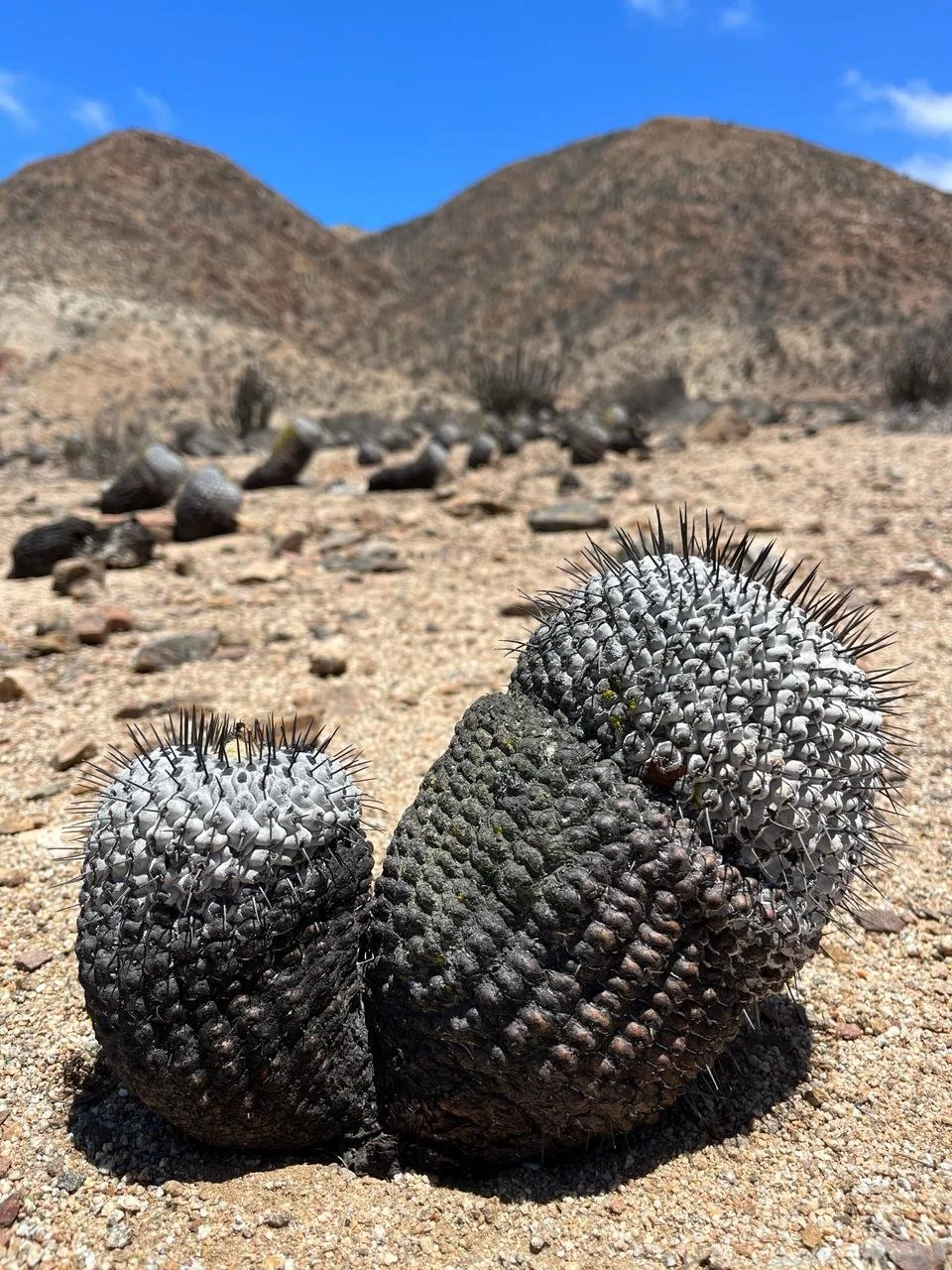
In a case now spanning several years, Italian based cactus conservation group L’Associazione per la Biodiversità e la sua Conservazione (ABC) is suing illegal traders who poached threatened cacti from the Atacama Desert in Chile for sale to the succulent plant market in Europe.
We have supported ABC to join the legal action brought by Ancona's Carabinieri and Prosecutor as a civil party to sue for harm to its mission: “to promote concrete actions for the protection of biodiversity, everywhere in the world."
The recognition by the Court of Ancona of the ABC’s right to bring the claim has wide legal significance: Groups like ABC have a right to take part in criminal proceedings related to offences that harm their missions. It confirms that conservation groups can help give a powerful legal voice to nature’s rights.If successful, the defendants will have to compensate ABC for the harm to its mission – funds that will be used to protect the repatriated plants and support conservation of protected cactus species threatened by illegal trade.
The case continues.
Cameroon: Ministry of Environment and Fauna sues illegal pangolin traders
-
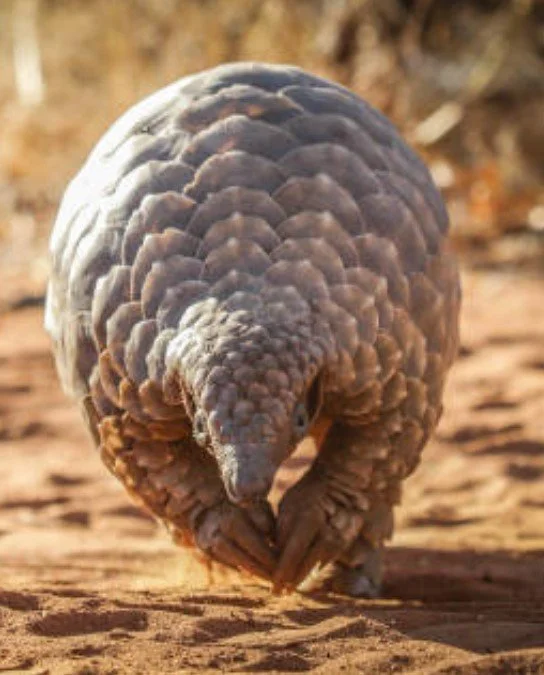
In 2018, Cameroon’s Ministry of Environment and Fuana brought joint criminal and civil proceedings against 5 men involved in the illegal, commercial trade of 630kg of Giant Pangolin scales. This represented approx. 210 individual animals of this Endangered species. They were held civilly liable for significant financial compensation to the State, including for the estimated cost of lost hunting permits, tax revenue, tourism income, ecosystem services, and the value of the pangolin scales and meat.
We also have a number of ongoing cases supported by our Network in addition to those shown here that we cannot post about publicly yet for safety, security and legal reasons.
We will provide updates on these cases as soon as we are able to.
Cases around the world

Thailand: Indigenous community sues mining company for river pollution
-
A lead mining company held a legal permit to establish a mining operation that started near Klity Lang Village in 1967. Over decades they illegally released waste into the Klity Creek, impacting public health and biodiversity, but neither the company nor public authorities responded to local concerns. A series of civil lawsuits were brought by Indigenous local residents, and First Instance, Appeal and Supreme Courts ruled in favor of the plaintiffs affirming their rights to live in a healthy environment, based on principles of the Thai Constitution. In 2015 and 2017, the company was ordered to compensate the affected community ($3,800,000), and also to pay for the cost of pollution cleanup to restore the river (approx. $15,000,000), collected from both the mining company and its executives.

France: Calanques National Park sues illegal fishers
-
In 2019, a French court found a group liable for the environmental harm caused by the illegal harvesting, selling and buying of fish, including protected species within Calanques National Park. The case was France’s first to demand compensation due to environmental damage caused by illegal poaching. The Court order included €450,000 in compensation for ecological harm, based on an estimate of the costs of managing and monitoring coastal protected areas per meter square. It also ordered €50,000 in compensation for the harm of impacting the park’s environmental protection mission and €50,000 in compensation to remedy harm to the Park’s brand image and reputation, which was exacerbated by media coverage of the case. The Court also ordered remedies from five restaurants that had illegally purchased wildlife, ordering €3,000 from each to compensate for harm to the protected area arising from the impairment of its environmental protection mission, and harm to its brand image and reputation. On appeal, the order was upheld but the value was reduced to €50,000 because the Court found the fishers were unable to pay the full amount.

Indonesia: Environment ministry sues company for illegal land clearing
-
In 2012, the Indonesian Ministry of Environment filed a lawsuit against PT. Kalista Alam, a palm oil agricultural company, for compensation for the environmental harm caused by a fire within the company’s plantation concession area. The court ruled that PT. Kalista Alam was liable, and ordered the defendant to pay compensation of Rp. 114,303,419,000 (US$12,202,300) for ecological harm and to conduct restoration actions estimated to cost Rp. 251,765,250,000 (US$26,876,845). One of the components in the damage claim is harm to biodiversity and loss of genetic resources. However, the total amount of money requested in this case is not based on an actual restoration plan, but rather on the default value and formula stated in Ministry of Environment and Forestry regulations. To date, this court decision has not been executed and no restoration action has thus far been conducted.
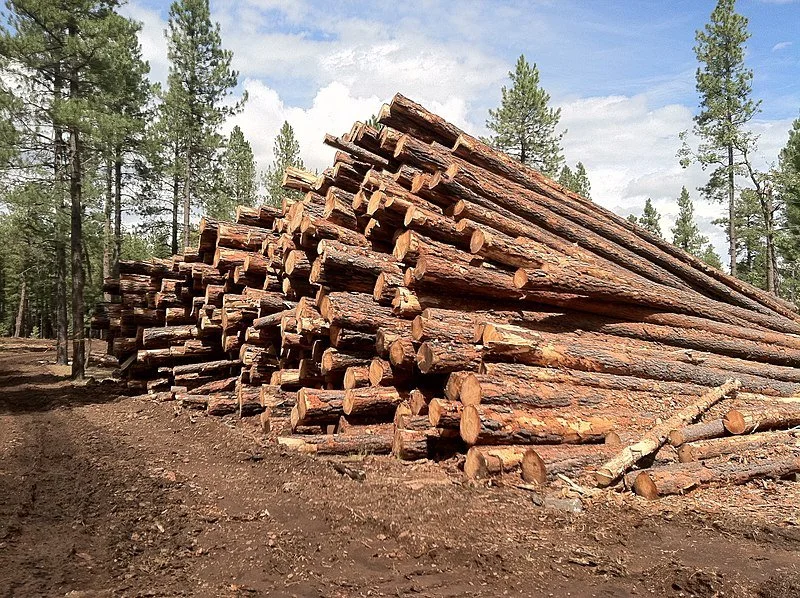
Solomon Islands: Communities sue logging company for breaching license
-
A company held a permit to undertake logging inside a forest of customary lands. However, the company breached terms of its license, notably logging inside of buffer zones, including along the Kologara River. A local resident brought a lawsuit on behalf of 3 villages in Hograno District that had been affected. In 2019, the Court ordered the company to compensate the affected communities ($240,000) and to pay for the cost of environmental restoration ($145,000).

Intl Court of Justice: Costa Rica sues Nicaragua for harm to San Juan River
-
In 2015, the International Court of Justice ruled in favour of Costa Rica in a civil case against the government of Nicaragua for transboundary environmental harm caused to the San Juan River, which forms the national border because the two countries. The court ruled that Nicaragua must compensate Costa Rica for material damage, including environmental harm, caused by the unlawful removal of trees for the excavation of canals in Costa Rica’s territory, which includes a site designated under the Ramsar Convention on Wetlands of International Importance. The compensation of USD$378,890 considered both the impairment or loss of environmental goods and services in the period prior to recovery, and payment for undertaking actions to restore the damaged environment. There is, however, still a lack of clarity on how exactly the court reached the compensation amount.

China: Selling wild meat of protected species.
-
In 2021, the Shandong Province Qingdao People's Prosecutor's Office brough a civil liability public interest lawsuit against an art appreciation center in Laoshan District, Quingdao that had been operating a food catering service. They company illegally purchased protected wildlife species to make into dishes, including 3 Bengal cobras, 1 pangolin and 4 bear paws. They were held liable for compensating the government for the loss of wildlife and related loss to ecosystem function, equivalent to $143,190. The offenders were also required to pay for the cost of scientific experts involved in the case. They were also ordered to issue a public apology in national media for the harm they had caused.
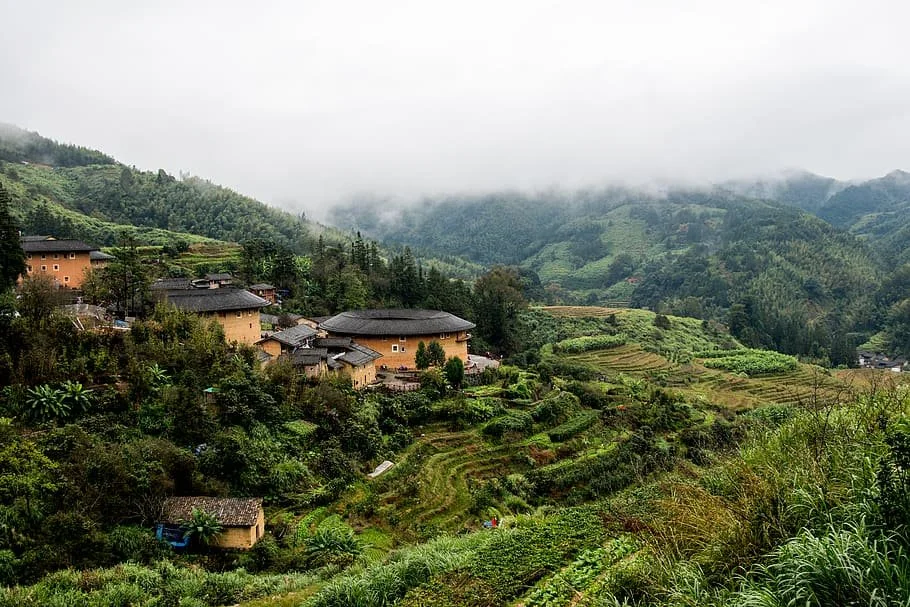
China: NGOs sue a company for illegal mining
-
The holders of a mining licence in Fujian Province undertook quarrying activities, but illegally dumped waste materials downhill causing severe damage to the local, and constructed a shed on forest land. In 2015, they were sued by two environmental civil society organizations, Friends of Nature and the Fujian Green House, under China's environmental public-interest lawsuit provision. The Courts ordered the offenders to reforest the site, and manage it for 3 years. They were also ordered to compensate the government for interim losses in ecosystem services, from the period from when the harm occurred to when it would be restored ($183,776). They were further ordered to cover the plaintiffs' legal costs ($23,876)
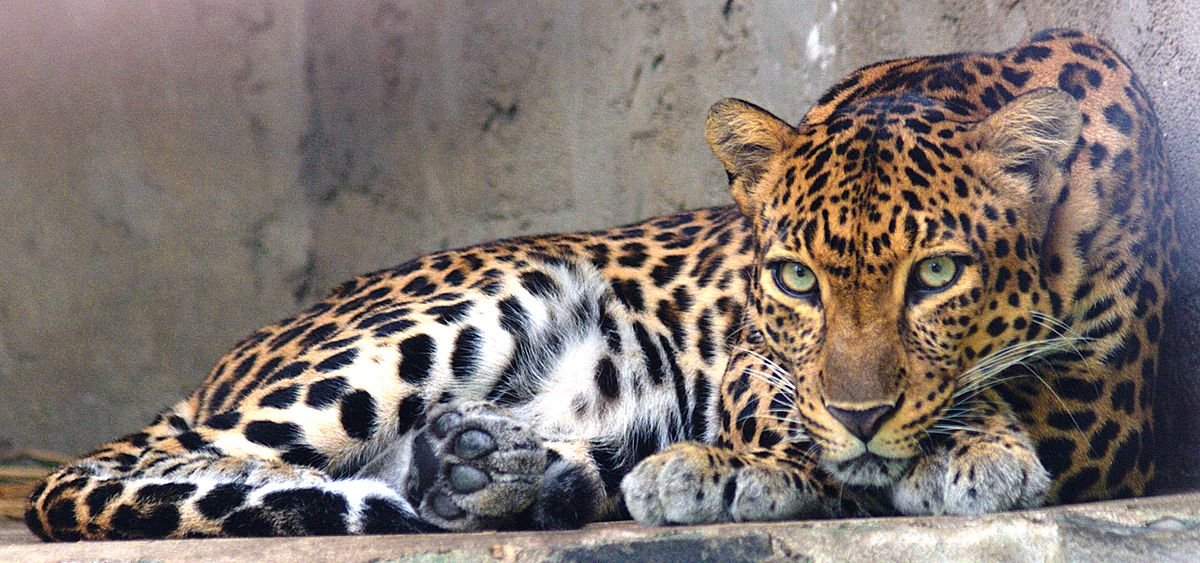
Thailand: Public prosecutor sues poacher of endangered species inside protected area
-
Thailand’s Public Prosecutor initiated criminal charges against five defendants - including a high-profile individual - arrested in February 2018 for hunting wildlife within Thung Yai Naresuan Wildlife Sanctuary, and having killed Critically Endangered Indochinese Leopard. In parallel, the Department of National Parks filed a civil liability suit against the offenders. The offenders were ordered to compensate the government for the environmental harm they had caused (approx. $59,000, plus interest)
Communities
We believe that a cohesive and collaborative community allows our network and approach to grow. Our community networks bring together lawyers, academics, conservationists, activists, current and future plaintiffs, government agencies and civil society organisations, creating positive forums where we can share ideas, expertise and experiences.
BELS
Biodiversity & Environmental Liability Scholars Network
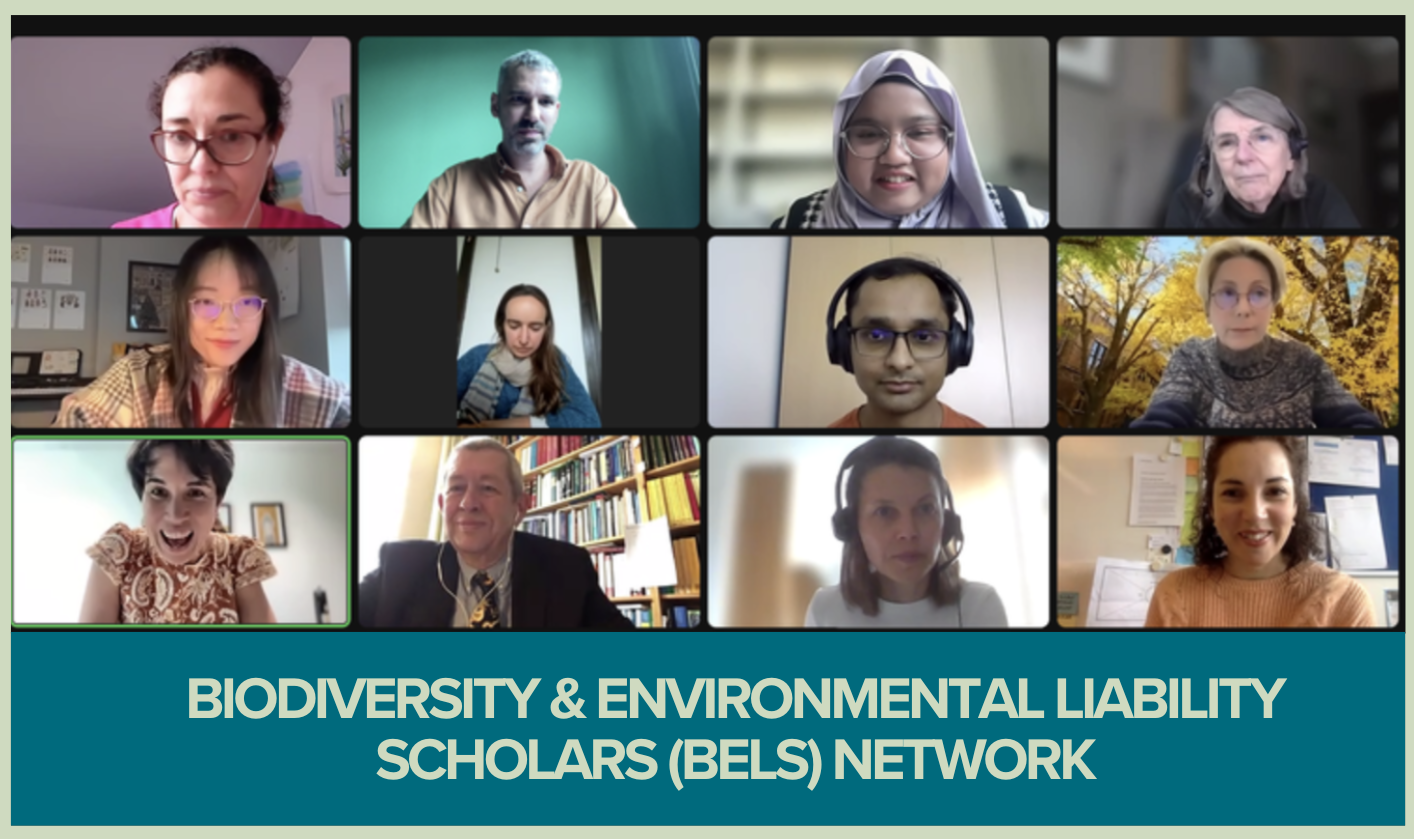
We are proud to convene the Biodiversity & Environmental Liability Scholars Network.
This global, interdisciplinary group of scholars conducts research on legal pathways that help secure remedies following incidents of environmental harm. We host virtual research talks, produce an internal newsletter, foster collaboration among researchers, share opportunities and draw collective insights to help inform policy and legal practice.
If you are interested in joining us, please contact Rika Fajrini
Meeting Programme
-
Ziying Liang from the University of Hong Kong will present her research co-authored with Prof. Amanda Whitford, titled "Recognising the Ecological Impact of Wildlife Crimes in China Through Public Interest Litigation".
-
Dr. Suhendan Göksal-Nizier from the University of Strasbourg will present her research on "Ecological Damage in French Law".
Dr. Göksal-Nizier's research examines the concept of ecological damage, which was introduced into the French Civil Code in 2016. In practice, several challenges remain, particularly regarding the assessment of ecological damage, the determination of remedial action and the calculation of compensation. Furthermore, the lack of a controlling mechanism and the lack of a fund impede the effectiveness of the ecological damage regime.
-
Dr Masako Ichihara and Dr Evan Hamman will co-present their latest research titled “Implementing International Environmental Law Through Domestic Courts: Developments in Biodiversity Litigation in Australia and Japan”.
-
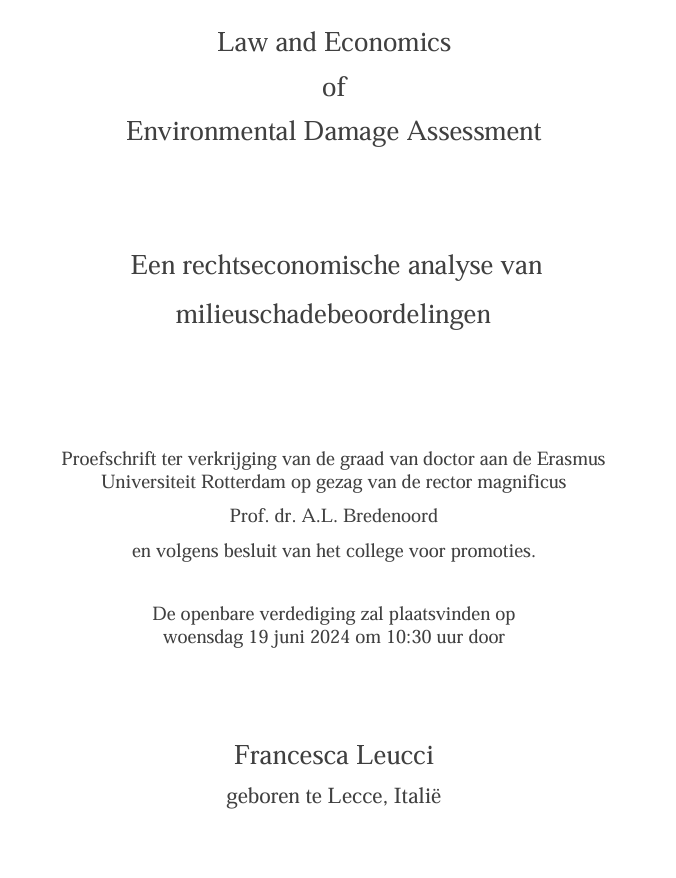
Dr. Francesca Leucci, lecturer in environmental law at Wageningen University, NL, looks at four major marine oil spills and asks to what extent polluters face the full costs of accidents, including ecological damage beyond clean-up and restoration.
-
Dr Jacob Phelps, Senior Technical Advisor at WCS Indonesia, presents his work on Diverse Values for Nature.
-
Meghna Abraham of the University of Oxford will share insights on how remedies and reparations are being understood in human rights litigation, and draw insights for the development of environmental liability cases.
-
Sroyon Mukherjee from the National University of Singapore will present on his ongoing research into remedies and valuation.
-
Alexandra Aragão from the University of Coimbra, and Jacob Phelps, Lancaster University and co-founder of Conservation-Litigation.org, will discuss differences in how legal and scientific audiences conceptualise harm to nature.
-
Inaugural meeting of the BELS Network, coordinated by Rika Fajrini and Dr Jacob Phelps.
Webinar recordings
March 2026
January 2026
November 2025
May 2025
March 2025
October 2024
August 2024
May 2024
Members
Prof. Valerie Fogleman, School of Law and Politics, University of Cardiff
Prof. Michael Faure, Comparative and International Environmental Law, European institute for Transnational Legal Research, Maastricht University
Dr. Francesca Leucci, Law Group, Wageningen University
Miaomiao Tian, Law School, Lancaster University
Maribel Rodriguez Valero, Law and Wildlife & Co-Executive Director, Conservation-Litigation.org
Dr. Layna Droiz. Graduate School of Frontier Sciences, Tokyo University
Dr. Isabelle Giraudou, Organization for Programs on Environmental Sciences, Tokyo University
Francesca Falco, Faculty of Life Sciences, Tel Aviv University
Dr. Michelle Lim, Law Faculty, Singapore Management University
Alice Bisiaux, International Partnerships Facility European Forest Institute
Dr. Jacob Phelps, Lancaster Environment Center, Lancaster University
Rika Fajrini, Kyoto University
Dr. Sroyon Mukherjee, Asia-Pacific Centre for Environmental Law, National University of Singapore
Dr. Heloisa Oliveira, Centre for Research in Public Law, University of Lisbon
Prof. Edward Webb, Viikki Tropical Resources Institute (VITRI), University of Helsinki
Publications by BELS members




LIABLE
Lawyers in Action for Biodiversity, Liability and Environment Network
The Lawyers in Action for Biodiversity, Liability and Environment (LIABLE) Network brings together environmental lawyers from around the world into a virtual community – focused on the use of legal provisions that hold environmental offenders accountable for remedying the harms they caused.
Despite a growing number of resources and communities available to environmental lawyers, in most countries there are still considerable gaps when it comes to environmental liabilities – including the range of legal actions to remedy harm through actions such as restoration, clean-up, apologies, compensation and biodiversity conservation. In many countries, case law is limited and experienced practitioners are few.
This Community helps to fill those gap by connecting practitioners to resources, opportunities and one another. It shares news, recent cases, publications and requests for support.
If you are a legal practitioner and would like to join, please submit your request on LinkedIn.
Plaintiffs’ Forum
A community of NGOs, government agencies, and lawyers from civil society, private sector and government is currently developing and bringing precedent-setting legal actions to secure remedies for nature in multiple countries.
This Forum helps to bring those leaders together to share experiences and advice. Because there is limited precedent for such cases in most countries, there is a huge need and opportunity to share lessons across jurisdictions. We bring together plaintiffs and their lawyers online and in person, to share lessons learned (link), build community, and develop best practices such as related to case selection and development, strategy, risk identification and mitigation.